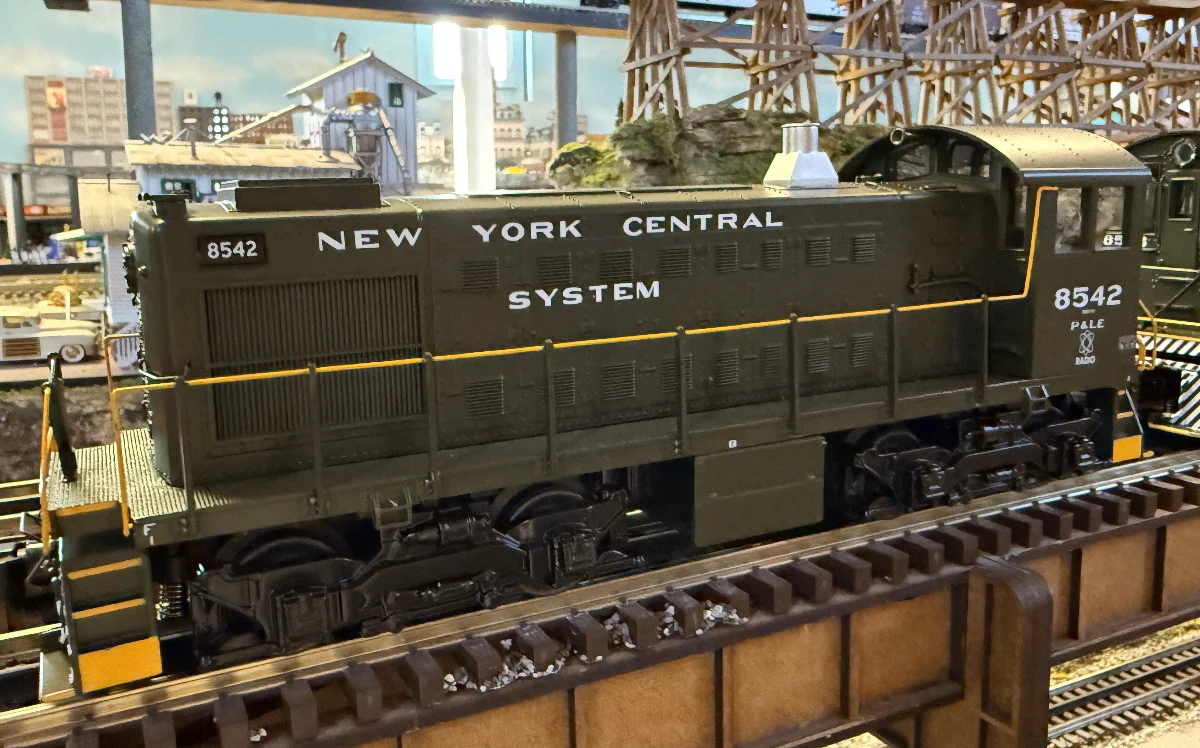
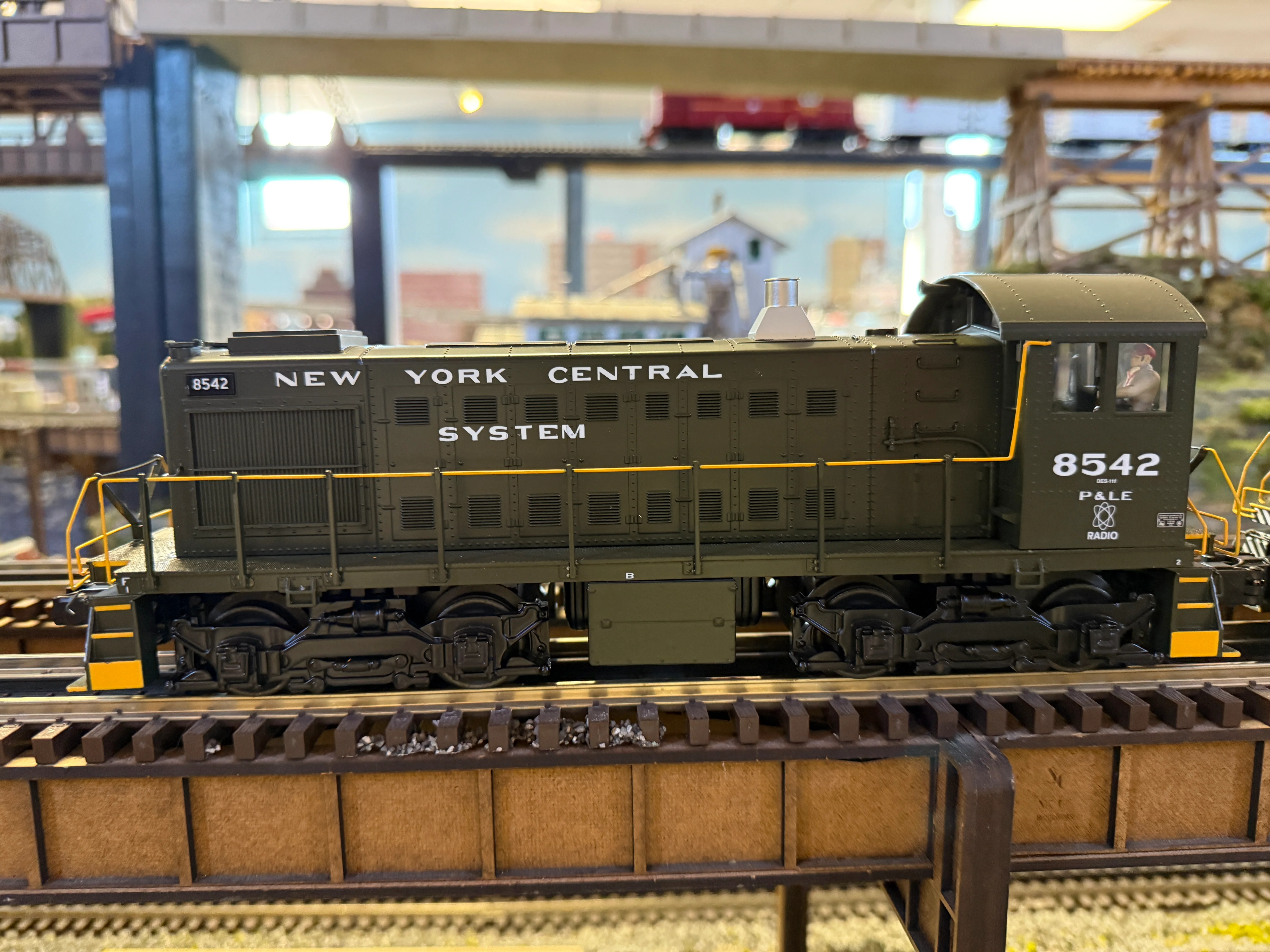
Atlas O 30138054 - Premier - S2 Diesel Locomotive "New York Central System" #8542 w/ PS3
| Announced Date: | April 2022 |
| Released Date: | Jan 2025 |
| Individually Boxed: | No - 2 to a case |
- Road Name: New York Central System
- Road Number: 8542
- Product Line: Atlas O Premier
- Scale: O Scale
- System: 3-Rail
Note: Prices are subject to change due to board availability/cost
Features:
- Intricately Detailed, Durable ABS Body
- Die-Cast Truck Sides, Pilots and Fuel Tank
- Metal Chassis
- Metal Handrails and Horn
- (2) Handpainted Engineer Cab Figures
- Authentic Paint Scheme
- Metal Wheels, Axles and Gears
- (2) Remote-Controlled Proto-Couplers
- Prototypical Rule 17 Lighting
- Directionally Controlled Constant Voltage LED Headlights
- Illuminated LED Number Boards
- (2) Precision Flywheel-Equipped Motors
- Operating ProtoSmoke Diesel Exhaust
- Onboard DCC/DCS Decoder
- Locomotive Speed Control In Scale MPH Increments
- Proto-Scale 3-2 3-Rail/2-Rail Conversion Capable
- 1:48 Scale Proportions
- Proto-Sound 3.0 With The Digital Command System Featuring Freight Yard Proto-Effects
- Unit Measures: 12” x 2 3/4” x 3 3/4”
- Operates On O-31 Curves
Overview:
Alco’s early diesel switchers, in the 1930s, were characterized by a high engine hood that reached almost to the cab roof. This was necessitated by the height of the McIntosh & Seymour inline 6-cylinder diesels that powered the new engines. Each cylinder in the massive four-stroke motors displaced 1,595 cubic inches, compared with 567 cu.in. per cylinder in Electro-Motive’s two-stoke diesels.
But in 1939, Electro-Motive introduced its SW1 switcher, with a lower hood and more cab windows that allowed it to brag about “full front vision.” In response, Alco redesigned its engine mounts to allow the motor to drop into a recess in the frame, and in 1940 introduced its S-1 and S-2 switchers, with a greenhouse-like cab that offered ample visibility in all directions. The two models differed mainly in power output. The normally aspirated S-1 with 600 h.p. booted many a small steam switcher from railroad rosters coast to coast. Turbocharging gave the S-2 1000 h.p., allowing it to replace larger steam switchers and branch line engines like 2-6-0s, 2-8-0s and 2-8-2s. The S-series rode on Alco’s own Blunt trucks, named for the in-house engineer who designed them to negotiate the tight turns and less-than-perfect track often found on switching assignments.
Introduced just in time for World War II’s crush of traffic, the S-2 became a best-seller. Rare was the Class 1 railroad that did not own a fleet of them, and short lines coast-to-coast rostered them as well. By the end of production in 1950, more than 1500 S-2s had been delivered. The engines proved extremely durable, with many earning their keep into the 1970s and ’80s, and a number still operating today in tourist railroad and short line service. Like most Alco engines with turbochargers, S-2s are known by railfans as “honorary steam locomotives,” for the bursts of smoke they emit when their turbochargers rev up on acceleration.
More Images
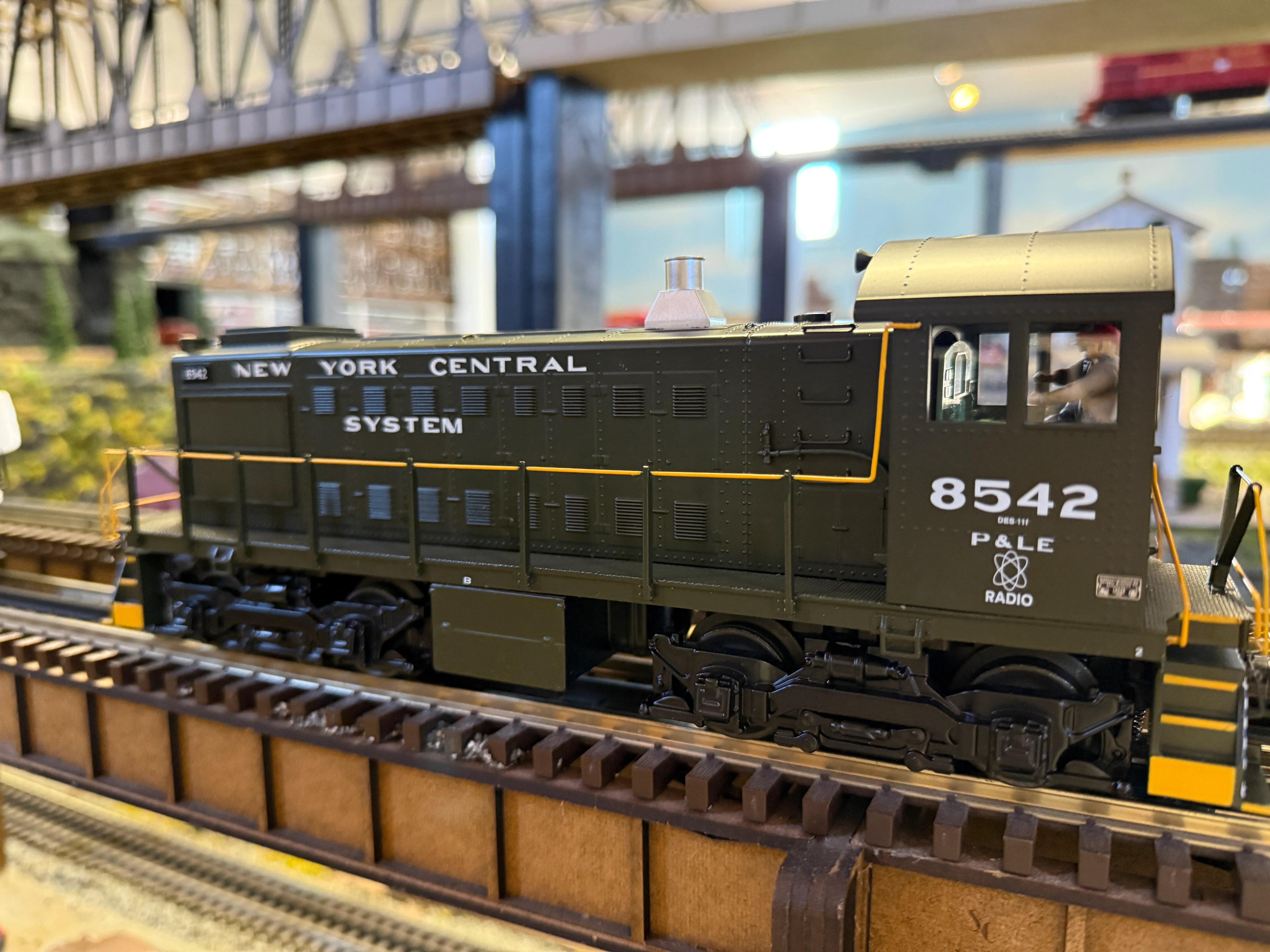
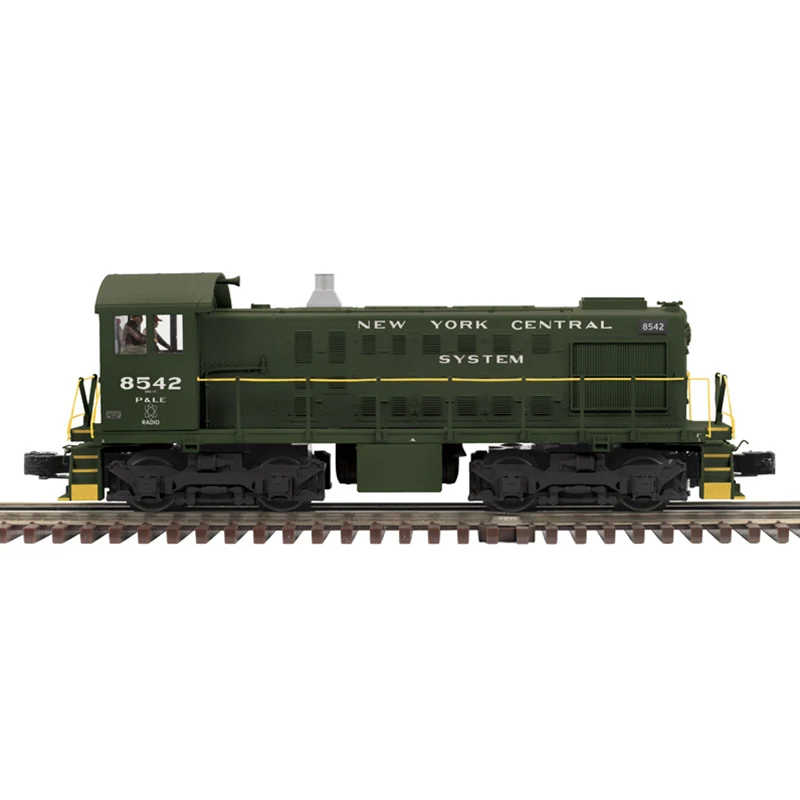
Atlas O 30138054 - Premier - S2 Diesel Locomotive "New York Central System" #8542 w/ PS3
| Announced Date: | April 2022 |
| Released Date: | Jan 2025 |
| Individually Boxed: | No - 2 to a case |
- Road Name: New York Central System
- Road Number: 8542
- Product Line: Atlas O Premier
- Scale: O Scale
- System: 3-Rail
Note: Prices are subject to change due to board availability/cost
Features:
- Intricately Detailed, Durable ABS Body
- Die-Cast Truck Sides, Pilots and Fuel Tank
- Metal Chassis
- Metal Handrails and Horn
- (2) Handpainted Engineer Cab Figures
- Authentic Paint Scheme
- Metal Wheels, Axles and Gears
- (2) Remote-Controlled Proto-Couplers
- Prototypical Rule 17 Lighting
- Directionally Controlled Constant Voltage LED Headlights
- Illuminated LED Number Boards
- (2) Precision Flywheel-Equipped Motors
- Operating ProtoSmoke Diesel Exhaust
- Onboard DCC/DCS Decoder
- Locomotive Speed Control In Scale MPH Increments
- Proto-Scale 3-2 3-Rail/2-Rail Conversion Capable
- 1:48 Scale Proportions
- Proto-Sound 3.0 With The Digital Command System Featuring Freight Yard Proto-Effects
- Unit Measures: 12” x 2 3/4” x 3 3/4”
- Operates On O-31 Curves
Overview:
Alco’s early diesel switchers, in the 1930s, were characterized by a high engine hood that reached almost to the cab roof. This was necessitated by the height of the McIntosh & Seymour inline 6-cylinder diesels that powered the new engines. Each cylinder in the massive four-stroke motors displaced 1,595 cubic inches, compared with 567 cu.in. per cylinder in Electro-Motive’s two-stoke diesels.
But in 1939, Electro-Motive introduced its SW1 switcher, with a lower hood and more cab windows that allowed it to brag about “full front vision.” In response, Alco redesigned its engine mounts to allow the motor to drop into a recess in the frame, and in 1940 introduced its S-1 and S-2 switchers, with a greenhouse-like cab that offered ample visibility in all directions. The two models differed mainly in power output. The normally aspirated S-1 with 600 h.p. booted many a small steam switcher from railroad rosters coast to coast. Turbocharging gave the S-2 1000 h.p., allowing it to replace larger steam switchers and branch line engines like 2-6-0s, 2-8-0s and 2-8-2s. The S-series rode on Alco’s own Blunt trucks, named for the in-house engineer who designed them to negotiate the tight turns and less-than-perfect track often found on switching assignments.
Introduced just in time for World War II’s crush of traffic, the S-2 became a best-seller. Rare was the Class 1 railroad that did not own a fleet of them, and short lines coast-to-coast rostered them as well. By the end of production in 1950, more than 1500 S-2s had been delivered. The engines proved extremely durable, with many earning their keep into the 1970s and ’80s, and a number still operating today in tourist railroad and short line service. Like most Alco engines with turbochargers, S-2s are known by railfans as “honorary steam locomotives,” for the bursts of smoke they emit when their turbochargers rev up on acceleration.
Product Information
Product Information
Shipping & Returns
Shipping & Returns
Description
| Announced Date: | April 2022 |
| Released Date: | Jan 2025 |
| Individually Boxed: | No - 2 to a case |
- Road Name: New York Central System
- Road Number: 8542
- Product Line: Atlas O Premier
- Scale: O Scale
- System: 3-Rail
Note: Prices are subject to change due to board availability/cost
Features:
- Intricately Detailed, Durable ABS Body
- Die-Cast Truck Sides, Pilots and Fuel Tank
- Metal Chassis
- Metal Handrails and Horn
- (2) Handpainted Engineer Cab Figures
- Authentic Paint Scheme
- Metal Wheels, Axles and Gears
- (2) Remote-Controlled Proto-Couplers
- Prototypical Rule 17 Lighting
- Directionally Controlled Constant Voltage LED Headlights
- Illuminated LED Number Boards
- (2) Precision Flywheel-Equipped Motors
- Operating ProtoSmoke Diesel Exhaust
- Onboard DCC/DCS Decoder
- Locomotive Speed Control In Scale MPH Increments
- Proto-Scale 3-2 3-Rail/2-Rail Conversion Capable
- 1:48 Scale Proportions
- Proto-Sound 3.0 With The Digital Command System Featuring Freight Yard Proto-Effects
- Unit Measures: 12” x 2 3/4” x 3 3/4”
- Operates On O-31 Curves
Overview:
Alco’s early diesel switchers, in the 1930s, were characterized by a high engine hood that reached almost to the cab roof. This was necessitated by the height of the McIntosh & Seymour inline 6-cylinder diesels that powered the new engines. Each cylinder in the massive four-stroke motors displaced 1,595 cubic inches, compared with 567 cu.in. per cylinder in Electro-Motive’s two-stoke diesels.
But in 1939, Electro-Motive introduced its SW1 switcher, with a lower hood and more cab windows that allowed it to brag about “full front vision.” In response, Alco redesigned its engine mounts to allow the motor to drop into a recess in the frame, and in 1940 introduced its S-1 and S-2 switchers, with a greenhouse-like cab that offered ample visibility in all directions. The two models differed mainly in power output. The normally aspirated S-1 with 600 h.p. booted many a small steam switcher from railroad rosters coast to coast. Turbocharging gave the S-2 1000 h.p., allowing it to replace larger steam switchers and branch line engines like 2-6-0s, 2-8-0s and 2-8-2s. The S-series rode on Alco’s own Blunt trucks, named for the in-house engineer who designed them to negotiate the tight turns and less-than-perfect track often found on switching assignments.
Introduced just in time for World War II’s crush of traffic, the S-2 became a best-seller. Rare was the Class 1 railroad that did not own a fleet of them, and short lines coast-to-coast rostered them as well. By the end of production in 1950, more than 1500 S-2s had been delivered. The engines proved extremely durable, with many earning their keep into the 1970s and ’80s, and a number still operating today in tourist railroad and short line service. Like most Alco engines with turbochargers, S-2s are known by railfans as “honorary steam locomotives,” for the bursts of smoke they emit when their turbochargers rev up on acceleration.